

Fire Pump Spare Parts and How to Order the Correct Component
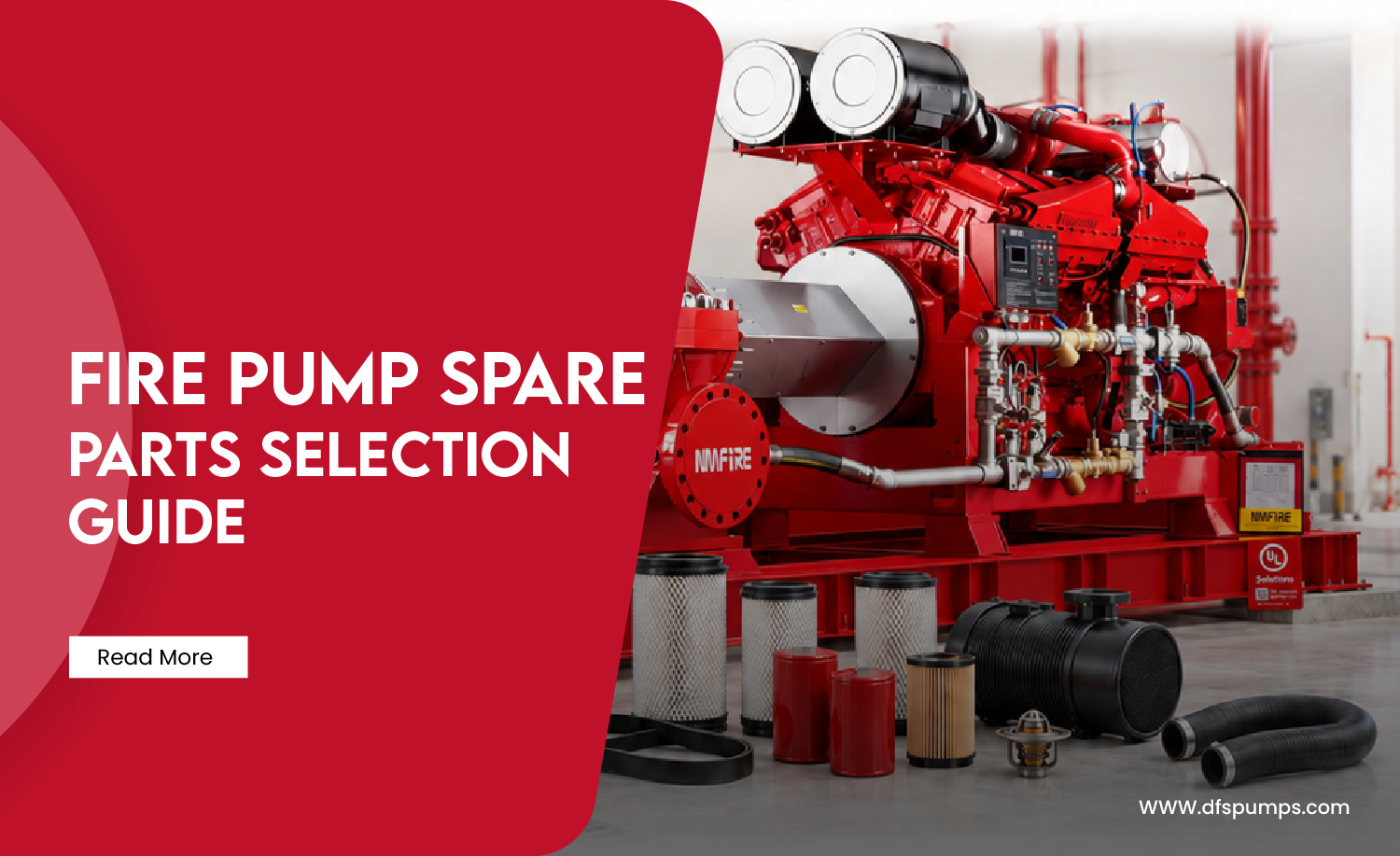
The correct fire pump spare part is the component approved for the installed equipment and its actual configuration. A similar appearance, matching thread, or familiar brand name is not enough. Before placing an order, identify the equipment, confirm the part reference, and establish what work and verification will be needed when it arrives.
This is particularly important when several pumps, engines, and controllers share one room. A maintenance team may call all of them the fire pump, while the replacement belongs to a specific engine or controller. Clear identification helps the supplier ask the right questions and prevents a routine service request from becoming a longer interruption.
For facility managers in Saudi Arabia, a spare parts plan should connect the installed asset register, maintenance schedule, and procurement lead times. The aim is to have the right information and appropriate parts available before the equipment needs attention.
Identify the component before describing the fault
Start with the equipment tag and location. Then record the manufacturer, model, and serial number from the relevant nameplate. For a pump package, capture the pump, driver, and controller separately. They can have different serial numbers, manuals, and parts lists even when delivered together.
Take clear photographs of the complete assembly and the component being discussed. A close photograph can show a marking, while a wider view explains where it sits. Include the connection arrangement and any readable labels. Do not remove guards or expose electrical components simply to obtain a photograph.
NMFIRE publishes a product alert showing original and counterfeit nameplates and warns against tampering. That makes original identification records useful throughout the equipment life. Preserve the nameplates and request clarification if their details appear inconsistent with the project documentation.
Identify the component before describing the fault
Start with the equipment tag and location. Then record the manufacturer, model, and serial number from the relevant nameplate. For a pump package, capture the pump, driver, and controller separately. They can have different serial numbers, manuals, and parts lists even when delivered together.
Take clear photographs of the complete assembly and the component being discussed. A close photograph can show a marking, while a wider view explains where it sits. Include the connection arrangement and any readable labels. Do not remove guards or expose electrical components simply to obtain a photograph.
NMFIRE publishes a product alert showing original and counterfeit nameplates and warns against tampering. That makes original identification records useful throughout the equipment life. Preserve the nameplates and request clarification if their details appear inconsistent with the project documentation.
Separate pump parts from engine consumables
Pump components can include packing, shaft sleeves, bearings, wear components, gaskets, and coupling elements, depending on the design. Diesel engine service items can include oil filters, fuel filters, air cleaners, belts, coolant hoses, thermostats, and heaters. These categories should not be mixed into one unidentified maintenance kit.
An oil filter that fits physically may still be unsuitable for the engine application. A belt with a similar length may have the wrong profile. A hose can have the right diameter but an unsuitable material or pressure rating. The manufacturer reference provides the starting point for resolving those differences.
The same principle applies to electrical components. A charger, sensor, relay, or control board should be matched to the installed controller and its documented configuration. Electrical parts selection and replacement require competent personnel and the appropriate manufacturer instructions.
Use the parts list associated with the equipment
Find the operation and maintenance manual issued for the installed model. Check whether a separate parts catalogue or illustrated parts list was supplied. Record the document revision and the item reference, not only the description that appears beside a photograph.
If a part has been superseded, ask for written confirmation of the replacement reference and any associated changes. A newer component may require a different fitting, related hardware, configuration step, or installation instruction. Procurement should pass that information to the maintenance team before the work begins.
Avoid copying a part number from another site without checking compatibility. Even equipment from the same manufacturer can have different arrangements. Serial number based confirmation is especially useful where an engine or controller has changed during the lifetime of a pump package.
Build a sensible site spares list
A site spares list should reflect the installed equipment and the consequences of waiting for a replacement. Start with planned service consumables, then review components whose absence could extend a repair. Discuss the list with the responsible service team and manufacturer rather than relying on a generic online checklist.
Consider the number of identical units, actual interchangeability, expected maintenance dates, and procurement lead times. A part shared by several confirmed identical assets may justify a different quantity from a component used only once. The availability of another pump does not, by itself, prove that an impaired system remains adequately protected.
General pump maintenance guidance from the Hydraulic Institute links spare parts planning to service conditions, supplier lead times, and backup arrangements. Apply that planning principle alongside the fire protection requirements and the equipment manufacturer’s instructions.
Distinguish consumables from repair decisions
Some parts are replaced as part of scheduled maintenance. Others should be ordered after inspection establishes what has failed and why. Replacing an item repeatedly without investigating the cause can leave the underlying problem unresolved.
For example, recurring packing problems may require inspection of the surrounding components and operating conditions. Repeated hose damage may point to routing, support, temperature, or compatibility issues. A replacement order should therefore include relevant symptoms and inspection findings, not only a request for the same item again.
Ask the technician to separate confirmed findings from possibilities. A clear report might state that leakage was observed at a particular connection and that the cause requires further inspection. That is more useful than presenting an unverified diagnosis as a confirmed failure.
Plan storage around the actual material
Spare parts can deteriorate while waiting on a shelf. Follow the manufacturer’s packaging, storage, and shelf life instructions. Keep identification labels attached and protect components from dust, moisture, sunlight, and physical damage as required for the item.
Rubber components, lubricants, electrical parts, and machined metal surfaces do not necessarily need the same storage conditions. Avoid placing every item in an open pump room cabinet without checking those differences. A protected, organised storage location also makes it easier to recognise missing stock.
Record receipt dates and any expiry or inspection dates. Use stock rotation where appropriate and review the spares list after equipment changes. A shelf containing parts for a removed engine can create false confidence if nobody has updated the inventory.
Include all information in the purchase request
A complete request should identify the site, asset tag, equipment manufacturer, model, serial number, requested part, quantity, and supporting photographs. Add the relevant manual reference if available. State whether the request is for scheduled maintenance, a confirmed repair, or technical identification.
Explain the required date and any existing system impairment through the site’s established reporting process. Do not assume that writing urgent changes manufacturing or shipping availability. Early notification allows the supplier to investigate options while the site manages its operational responsibilities.
If the exact part number is unknown, say so. Ask for identification rather than guessing. A wrong number copied into a formal purchase order can be harder to correct than an honest request for assistance supported by photographs and equipment records.
Ordering NMFIRE spare parts through DFS
DFS is the exclusive agent for NMFIRE in Saudi Arabia. We coordinate technical enquiries with the manufacturer and help customers identify requirements for their installed equipment. Clear model and serial number information makes that coordination more effective.
Our pump supply model is import from the factory in China. We do not assemble pumps in Saudi Arabia or hold local pump stock. Confirm availability and lead time for each spare parts enquiry rather than assuming that a component is held locally or can be supplied immediately.
We aim to provide competitive offers and timely support. The most useful first message includes the asset details, photographs, required quantity, and maintenance context. This gives our team a practical basis for discussing compatibility, supply arrangements, and any further information needed.