

Fire Pump Impeller Types: Open, Semi-Open, and Enclosed. What the Difference Means for Your System
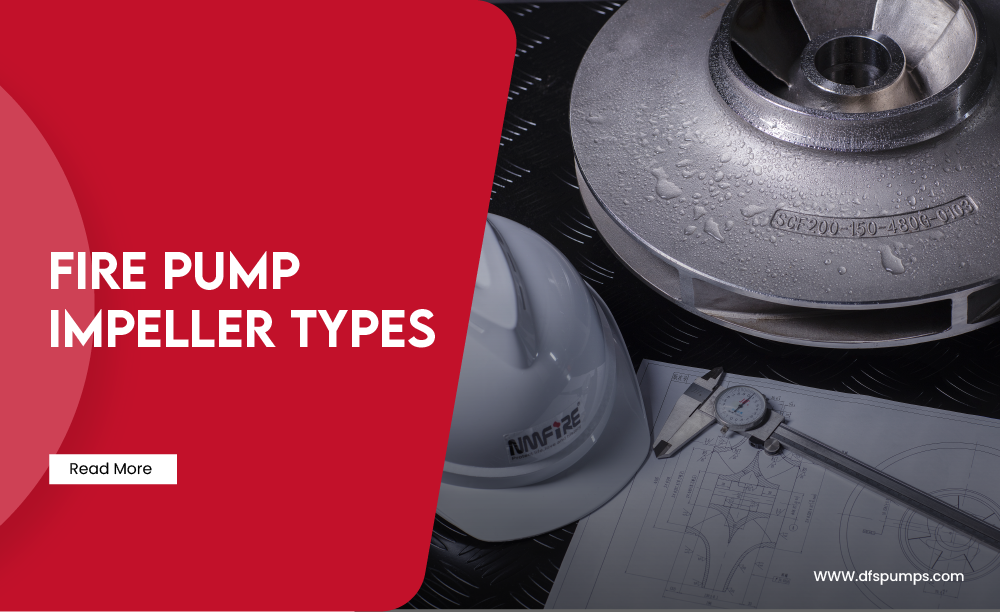
Most fire protection discussions focus on the pump type horizontal split case, end suction, vertical turbine. Those are the headlines. But inside every centrifugal fire pump is a component that actually does the hydraulic work: the impeller. And the design of that impeller whether it is open, semi-open, or enclosed has a direct effect on efficiency, maintenance requirements, water quality suitability, cavitation resistance, and long-term reliability.
This is a topic that rarely gets standalone coverage in fire protection content, yet it comes up constantly during specification reviews, equipment selection meetings, and post-failure investigations. Engineers who understand impeller geometry make better pump selections. Contractors who understand impeller materials make better arguments when reviewing submittals. Facility managers who understand wear patterns catch problems before they become emergencies.
So let us walk through all three types in detail what each one looks like physically, how it performs hydraulically, what NFPA 20 and UL 448 require in terms of materials, and crucially, why the enclosed (closed) impeller has become the overwhelmingly dominant choice for certified fire pumps in commercial and industrial applications.
Why the Impeller Is the Heart of a Centrifugal Fire Pump
Before comparing types, it is worth being precise about what an impeller actually does. In a centrifugal fire pump, the impeller is the rotating component that converts mechanical energy from the motor or engine into fluid velocity and pressure. Water enters through the eye the central opening of the impeller and the spinning vanes throw it outward by centrifugal force toward the casing walls, where a volute or diffuser converts that velocity into pressure.
The three variables that an impeller design controls are: how efficiently it moves water, how well it resists cavitation (the formation of destructive vapor bubbles under low pressure), and how well it handles any solid particles in the water. Each impeller type makes a different trade-off between these three factors, and that is what drives the selection decision.
In fire pump applications, the water being pumped is almost always clean municipal supply water, tank water, or treated reservoir water with minimal suspended solids. That single fact drives the selection toward one impeller type more than any other. But understanding why requires knowing what each design actually does.
Open Impellers: Maximum Accessibility, Minimum Efficiency
An open impeller is the simplest of the three designs. The vanes are attached directly to a central hub and mounted onto the shaft there are no shrouds, no side plates, no covering of any kind on either face of the impeller. The vanes are fully exposed to the fluid on both sides.
How It Works
Water enters through the eye and the spinning vanes push it outward toward the casing. Because there are no shrouds guiding the flow between the vanes, some fluid escapes across the gap between the vane tips and the casing walls, recirculating back rather than being discharged. This leakage is the fundamental hydraulic inefficiency of the open design.
Performance Characteristics
Open impellers typically operate in the 50 to 60% hydraulic efficiency range noticeably lower than semi-open or enclosed designs. They also require a higher Net Positive Suction Head (NPSH) to operate without cavitation. The unshrouded vane configuration creates more turbulence at the inlet eye, which means the available suction pressure needs to be higher relative to the pump’s requirements to keep vapor from forming.
On the positive side, open impellers are easy to inspect and clean. Because there are no shrouds blocking access to the vanes, maintenance technicians can reach all surfaces without full pump disassembly. For applications where the fluid carries large solids or fibrous material, this clog-resistance and accessibility is genuinely valuable.
Where Open Impellers Belong and Where They Don't
Open impellers are the standard choice for mine dewatering, raw sewage handling, slurry pumping, dredging, and other applications where the pumped fluid contains large suspended solids that would jam or erode a more complex impeller design. They are structurally weaker than enclosed impellers and are generally found in smaller pumps.
In certified fire pump applications, open impellers are rarely if ever specified. Fire protection water is clean, the pump is expected to operate at high efficiency across a defined performance curve, and the lower efficiency and higher NPSH requirements of an open impeller create no compensating benefit. A fire pump is not pumping slurry or sewage the trade-offs that justify an open impeller in other industries simply do not apply here.
Semi-Open Impellers: The Middle Ground
A semi-open impeller adds a back shroud to the open design. The vanes are attached to a solid disc or plate on the rear face of the impeller, while the front face remains open. This single addition changes the performance profile meaningfully.
How the Back Shroud Changes Everything
The back shroud does two important things. First, it significantly increases the mechanical strength of the impeller the vanes are no longer free-standing structures cantilevered off the hub; they are braced along their entire length by the shroud plate. Second, it reduces the recirculation loss on the back side of the impeller, improving hydraulic efficiency compared to a fully open design.
Semi-open impellers typically operate in the 50 to 70% efficiency range meaningfully better than open impellers, though still below the best enclosed impeller efficiencies. Their NPSH requirement sits between open and closed designs, making them a genuine middle ground hydraulically as well as mechanically.
The Clearance Problem
One engineering challenge specific to semi-open impellers is clearance sensitivity. The gap between the open face of the vanes and the adjacent casing wall must be kept small and precise typically within a few tenths of a millimeter in smaller pumps. If this clearance becomes too large through wear over time, fluid slips back across the gap and efficiency drops noticeably. Regular axial adjustment is needed to compensate for wear, which adds a maintenance step that enclosed impellers avoid.
With semi-open impellers, the clearance between the vanes and pump casing needs to be small if too large, slippage and recirculation will occur, reducing performance and efficiency.
Where Semi-Open Impellers Are Used
Semi-open impellers are common in chemical process pumps, food and beverage applications, and situations where the fluid has a moderate solids content that would clog a closed impeller but does not justify the full open design. They are a practical choice for mid-range pump sizes in industrial processes.
In fire protection, semi-open impellers appear in some jockey pump applications and certain smaller end-suction configurations, but they are not the dominant choice for main fire pumps. The maintenance overhead of managing clearance, combined with their lower efficiency ceiling compared to enclosed designs, makes them less preferred for the high-reliability, long-service-life demands of a certified fire pump installation.
Enclosed (Closed) Impellers: The Standard for Certified Fire Pumps
When selecting a fire pump controller, it is essential to consider the following factors:
- Type of Fire Pump: Electric or diesel-driven.
- Compliance with Safety Standards: Ensure the controller meets UL/FM and NFPA 20 standards.
- Advanced Features: Look for digital monitoring, remote access, and user-friendly interfaces.
- Manufacturer Reputation: Choose controllers from trusted brands like Tornatech.
- Local Support and Maintenance: Opt for suppliers like DFS Pumps for reliable service in Saudi Arabia.
Conclusion
Tornatech fire pump controllers are among the most reliable and advanced fire pump control solutions available today. With their compliance with international safety standards, user-friendly interfaces, and cutting-edge technology, they are the preferred choice for fire protection systems. DFS Pumps, as a trusted supplier in Saudi Arabia, ensures that industries and businesses have access to top-quality fire fighting pumps, including NMFIRE Pumps and UL/FM fire protection solutions.
For expert guidance on selecting the right fire pump controller and system, contact DFS Pumps today. Ensure the safety of your property with the best fire protection solutions available in the market.